Tennis and Padel Elbow: Treating Racket-Sport Injuries
Tennis and padel elbow conditions, clinically known as lateral and medial epicondylitis, stem from repetitive wrist extension and forceful gripping mechanics. Treating these painful overuse injuries effectively requires specialized physical therapy, targeted eccentric loading, and manual soft tissue mobilization. Specialists at The Movement focus on restoring forearm tendon health and correcting kinetic chain dysfunctions to help racket-sport athletes return safely to the court. Understanding the underlying biomechanical triggers and early rehabilitation options prevents minor forearm tendon strains from progressing into chronic joint degeneration.
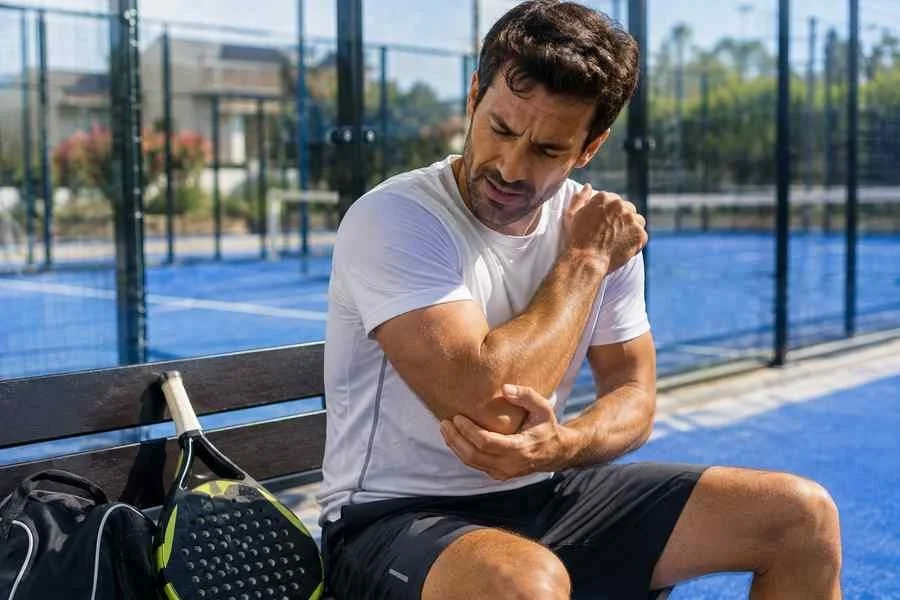
Racket sports across the Balearic Islands offer fantastic cardiovascular and social benefits, yet the explosive nature of court play frequently strains the elbow complex. Whether you are executing powerful baseline serves in tennis or rapid bandeja shots in padel, your forearm tendons endure tremendous mechanical stress. Recognizing early signs of localized joint irritation ensures you seek prompt clinical guidance before minor tendonitis limits your athletic performance.
Navigating racket-sport rehabilitation successfully involves learning how forearm mechanics interact with court physical demands. Knowing how professional care addresses tendon degeneration, grip weakness, and muscular imbalances helps you make informed choices about your physical health and long-term athletic longevity.
Tennis and Padel Elbow: Treating Racket-Sport Injuries
Tennis elbow, or lateral epicondylitis, involves micro-tearing and degenerative changes in the extensor carpi radialis brevis tendon originating from the outer elbow. This condition frequently develops from repetitive backhand strokes, off-center ball impacts, or excessively tight racket string tension. Players experience sharp pain and tenderness when lifting objects, opening jars, or gripping equipment firmly.
Padel elbow often shares similar biomechanical origins, frequently compounding lateral or medial strain due to the heavy use of glass walls and shorter hitting levers. Medial epicondylitis, commonly called golfer's elbow, affects the inner tendon origins responsible for wrist flexion and pronation. To understand how clinical specialists evaluate these complex kinetic issues, explore our comprehensive diagnostic approach to musculoskeletal recovery.
Common symptoms across both conditions include progressive weakening of grip strength, morning joint stiffness, and aching discomfort radiating down the forearm. Ignoring these warning signs allows micro-trauma to accumulate within the avascular zones of the tendon, delaying natural healing. Early physical therapy intervention interrupts this degenerative cycle by promoting localized blood flow and collagen remodeling.
Addressing racket-sport injuries promptly prevents chronic tendinosis and helps maintain the fluid movement quality needed for competitive court play. Clinical rehabilitation utilizes hands-on soft tissue therapy and joint mobilization to relieve abnormal muscle tension and improve forearm flexibility. For athletes seeking specialized care tailored to sports trauma, reviewing professional targeted physiotherapy treatments provides clear insight into modern recovery protocols.
Understanding Tendon Pathology and Kinetic Chain Mechanics
Tendon pathology in racket sports rarely occurs in total isolation from the rest of the upper extremity and torso. When players strike a tennis ball or padel ball, force transfers efficiently from the feet, through the core, and out through the arm. Weakness or delayed activation in the shoulder blade stabilizers or core muscles forces the elbow to absorb excessive mechanical load.
Correcting kinetic chain inefficiencies is therefore essential for achieving long-term recovery and preventing recurrent elbow flare-ups. Physical therapists evaluate your entire upper body kinetic chain to identify structural flaws that increase torque on the elbow joint. If your elbow pain stems from poor structural alignment or postural fatigue from desk work, adopting corrective strategies to fix bad posture significantly enhances arm resilience.
Eccentric Loading and Racket-Sport Injury Prevention
Rehabilitating a compromised elbow tendon requires progressive eccentric loading exercises designed to stimulate collagen synthesis and rebuild tendon tensile strength. Initial physical therapy phases prioritize pain modulation, gentle range of motion restoration, and isolated forearm activation without heavy resistance. As tissue healing progresses, clinicians introduce controlled weighted exercises that simulate the deceleration forces experienced during racket swings.
Integrating structured injury prevention routines into your weekly training schedule safeguards your elbows against the high-velocity demands of modern racket sports. Strengthening the periscapular muscles and rotator cuff ensures your arm operates on a stable foundation during every stroke. If you are recovering from a court-related strain or joint trauma, exploring dedicated sports injury treatment options can accelerate your return to peak physical performance.
Recovery also requires sport-specific functional retraining to prepare your joints for competitive match conditions safely. Physical therapists analyze your swing mechanics to identify movement flaws that contribute to recurrent tendon strain. For personalized guidance on overcoming complex sports injuries, working with experienced practitioners like Federica Gaia ensures your recovery plan matches your exact lifestyle demands.
Comprehensive Biomechanical Evaluation and Clinical Testing
Diagnosing elbow pain requires a thorough clinical evaluation to differentiate true tendon pathology from nerve entrapment or referred cervical spine symptoms. Your physiotherapist will perform specific orthopedic tests, such as Mill's test or Cozen's test, to reproduce localized pain at the epicondyle. Palpation of the common extensor or flexor tendon origins helps determine the precise grade of tissue tenderness and localized swelling.
Evaluating active and passive wrist range of motion provides additional clues regarding joint restriction and associated muscle guarding in the forearm. Clinicians also assess cervical spine mobility and upper limb nerve tension to rule out neural contributions to your arm discomfort. Identifying these contributing factors ensures your treatment plan targets the entire kinetic chain rather than just the localized site of pain.
Understanding the exact mechanical trigger of your injury allows your practitioner to recommend specific equipment modifications, such as adjusting grip size or dampening string vibration. Small adjustments to your sports equipment can dramatically reduce repetitive micro-trauma during intense training sessions. Comprehensive clinical evaluations establish a reliable baseline to measure your functional progress throughout the rehabilitation process.
Advanced Rehabilitation Protocols for Racket-Sport Athletes
Transitioning from acute injury management back to competitive tennis or padel requires a structured, multi-phase functional rehabilitation program. Your physical therapist will gradually reintroduce high-speed swinging drills and heavy resistance training to simulate real-world court conditions safely. This phase bridges the gap between basic clinical recovery and the rigorous physical demands of tournament play.
Monitoring tendon response during progressive loading is critical to avoid setbacks during the later stages of your rehabilitation journey. If you experience lingering joint stiffness or sharp discomfort while practicing your sport, consult our clinical team through the contact page for prompt evaluation. Expert oversight ensures minor flare-ups are managed correctly before they turn into major structural setbacks.
Maintaining long-term elbow health relies heavily on consistent adherence to home exercises and periodic functional re-evaluations with your clinician. Continuing your prescribed forearm conditioning routines long after pain subsides protects your joints against future wear and tear. When you are ready to address chronic elbow issues and optimize your arm mechanics, you can easily book appointment sessions online to start your recovery.
Protecting your elbows allows you to enjoy tennis and padel across Mallorca's premier courts with complete confidence and freedom. Through targeted physical therapy, proper biomechanical alignment, and proactive injury prevention, you can overcome forearm pain and maintain lifelong physical vitality. Taking charge of your joint health today guarantees countless comfortable, active days out on the court.
Frequently Asked Questions
What is the difference between tennis elbow and padel elbow?
Tennis elbow affects the outer tendon of the elbow due to repetitive wrist extension, while padel elbow can involve both outer and inner tendons due to heavy glass wall impacts and rapid wrist action.
Can racket-sport elbow injuries heal without surgery?
Yes, the vast majority of epicondylitis cases heal successfully with conservative physical therapy, eccentric loading exercises, manual soft tissue therapy, and activity modification.
How long does recovery from elbow tendinopathy take?
Recovery duration varies based on symptom duration and tissue degeneration, typically ranging from six to twelve weeks of consistent rehabilitation for optimal tendon remodeling.
Should I wear a counterforce brace while playing?
Counterforce braces can help manage acute pain during activity by reducing muscle tension at the tendon insertion, but they should be used alongside active strengthening exercises rather than as a permanent fix.
When should I consult a physiotherapist for arm pain?
You should consult a physiotherapist if elbow or forearm pain persists for more than a few days, worsens with gripping activities, or interferes with your daily routine and sports participation.