Sailing and Paddleboard Shoulder Injuries: A Mallorca Guide
Sailing and paddleboarding shoulder injuries typically stem from repetitive overhead pulling, sudden resistance from waves or heavy wind gusts, and rotator cuff impingement. Managing these water sports conditions effectively requires targeted physical therapy, joint mobilization, and specialized scapular stabilization exercises. Clinicians at The Movement focus on restoring proper shoulder biomechanics to help water sports enthusiasts recover quickly and return safely to the Mediterranean Sea. Understanding the underlying causes and early rehabilitation options prevents minor rotator cuff strains from developing into chronic shoulder joint pathologies.
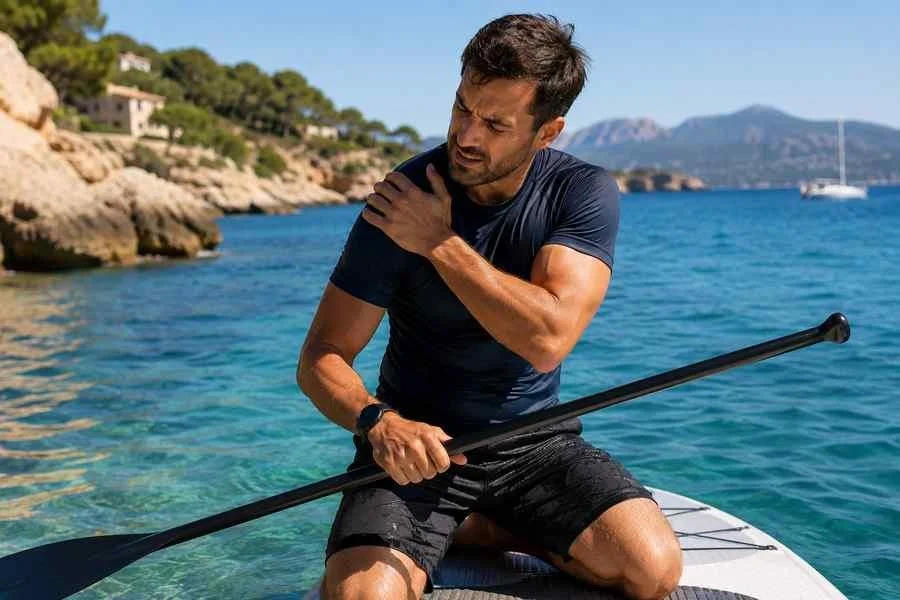
Water sports along the Balearic coastline offer incredible physical and mental benefits, yet the demanding nature of marine recreation frequently strains the shoulder complex. Whether you are hauling heavy lines on a sailboat or paddling against choppy currents on a stand-up paddleboard, your shoulder joints endure intense biomechanical loads. Recognizing early signs of joint irritation ensures you seek prompt clinical guidance before minor tendonitis limits your athletic performance on the water.
Navigating water sports rehabilitation successfully involves learning how joint mechanics interact with marine physical demands. Knowing how professional care addresses rotator cuff strains, labral stress, and postural imbalances helps you make informed choices about your physical health and long-term joint longevity.
Sailing and Paddleboard Shoulder Injuries: A Mallorca Guide
Sailing places immense eccentric and concentric stress on the shoulder girdle, particularly during maneuvers like tacking, jibing, and managing heavy spinnaker sheets. The repetitive pulling motions required to trim sails under high wind pressure can rapidly fatigue the rotator cuff muscles and tendon insertions. Over time, muscle fatigue compromises joint stability, increasing the likelihood of impingement syndrome and localized bursitis.
Stand-up paddleboard enthusiasts face a distinct set of upper body demands driven by continuous, repetitive paddle strokes against water resistance. Each stroke requires powerful latissimus dorsi engagement, scapular retraction, and precise rotator cuff control to stabilize the glenohumeral joint. If your technique lacks proper core rotation, your shoulder joints absorb excessive shear forces, leading to overuse injuries. To understand how clinical specialists evaluate these complex kinetic issues, explore our comprehensive diagnostic approach to musculoskeletal recovery.
Common shoulder injuries in sailing and paddleboarding include rotator cuff tendinopathy, subacromial impingement, biceps tendonitis, and localized labral irritation. Symptoms often begin as a dull ache deep inside the shoulder joint after a long day on the water, eventually progressing to sharp pain during overhead movements. Ignoring these early warning signs allows micro-trauma to accumulate within the delicate soft tissues surrounding the shoulder socket.
Addressing water sports injuries promptly prevents chronic degeneration and helps maintain the fluid movement quality needed for aquatic recreation. Clinical rehabilitation utilizes hands-on soft tissue therapy and joint mobilization to restore normal joint arthrokinematics and relieve abnormal capsular tension. For athletes seeking specialized care tailored to aquatic trauma, reviewing professional targeted physiotherapy treatments provides clear insight into modern recovery protocols.
Understanding Rotator Cuff Mechanics and Scapular Stability
Rotator cuff muscles act as dynamic stabilizers that keep the humeral head securely centered within the shallow glenoid fossa during movement. When sailors pull ropes or paddleboarders drive their blades through the water, these four core muscles work continuously to maintain joint congruence. Weakness or delayed activation in any single rotator cuff component immediately disrupts normal shoulder rhythm and increases friction.
Scapular stability serves as the vital foundation for all powerful upper extremity movements in sailing and paddleboarding. If your shoulder blade wings or fails to rotate upward correctly during arm elevation, the subacromial space narrows significantly. This mechanical pinching irritates the supraspinatus tendon and surrounding bursae, triggering painful inflammatory responses that stall your athletic progress.
Rotator Cuff Rehabilitation and Marine Injury Prevention
Rehabilitating a compromised shoulder requires progressive loading exercises designed to rebuild tendon resilience and enhance neuromuscular coordination. Initial physical therapy phases prioritize pain modulation, gentle range of motion restoration, and isolated rotator cuff activation without heavy resistance. As tissue healing progresses, clinicians introduce closed-chain stabilization drills that mimic the unstable environments experienced on boats and paddleboards.
Integrating structured injury prevention routines into your weekly training schedule safeguards your shoulders against the unpredictable forces of wind and waves. Strengthening the periscapular muscles ensures your shoulder blade maintains a stable platform while you pull lines or paddle long distances. If your shoulder pain stems from poor structural alignment or postural fatigue from desk work, adopting corrective strategies to fix bad posture significantly enhances upper body resilience.
Water sports rehabilitation also requires sport-specific functional retraining to prepare your joints for high-velocity marine environments. Physical therapists analyze your paddling posture and sailing mechanics to identify movement flaws that contribute to recurrent joint strain. For personalized guidance on overcoming complex aquatic injuries, working with experienced practitioners like Paul Gehrig ensures your recovery plan matches your exact lifestyle demands.
Advanced Rehabilitation Protocols for Water Sports Enthusiasts
Transitioning from acute injury management back to active sailing and paddleboarding requires a structured, multi-phase functional rehabilitation program. Your physical therapist will gradually reintroduce high-speed rotational movements and heavy resistance training to simulate real-world marine conditions safely. This phase bridges the gap between basic clinical recovery and the rigorous physical demands of competitive or recreational water sports.
Monitoring tissue response during progressive loading is critical to avoid setbacks during the later stages of your rehabilitation journey. If you experience lingering joint stiffness or sharp discomfort while practicing your sport, consult our clinical team through the contact page for prompt evaluation. Expert oversight ensures minor flare-ups are managed correctly before they turn into major structural setbacks.
Maintaining long-term shoulder health relies heavily on consistent adherence to home exercises and periodic functional re-evaluations with your clinician. Continuing your prescribed rotator cuff conditioning routines long after pain subsides protects your joints against future wear and tear. When you are ready to address chronic shoulder issues and optimize your upper body mechanics, you can easily book appointment sessions online to start your recovery.
Protecting your shoulders allows you to enjoy sailing and paddleboarding across Mallorca's stunning waters with complete confidence and freedom. Through targeted physical therapy, proper biomechanical alignment, and proactive injury prevention, you can overcome shoulder pain and maintain lifelong physical vitality. Taking charge of your joint health today guarantees countless comfortable, active days out on the Mediterranean Sea.
Frequently Asked Questions
What causes shoulder injuries in sailors and paddleboarders?
Shoulder injuries in water sports typically result from repetitive overhead pulling, sudden resistance from strong wind gusts or waves, and poor scapular stability, which can lead to rotator cuff impingement.
How can I prevent shoulder pain while paddleboarding?
Prevent shoulder pain by focusing on proper core rotation during paddle strokes, strengthening your rotator cuff and periscapular muscles, and gradually building your endurance on the water.
When should I see a physiotherapist for shoulder pain?
You should consult a physiotherapist if shoulder pain persists for more than a few days, interferes with your sleep, or causes weakness during everyday lifting and reaching activities.
Can rotator cuff tendinopathy heal without surgery?
Yes, the vast majority of rotator cuff tendinopathies heal successfully with conservative physical therapy, targeted strengthening exercises, manual therapy, and activity modification.
How long does shoulder rehabilitation typically take?
Rehabilitation duration varies based on injury severity, tissue type involved, and adherence to home exercise programs, typically ranging from a few weeks for mild strains to several months for complex issues.