Sports Injury Treatment in Mallorca: How Physiotherapy Gets You Back Faster
Mallorca is not just a holiday destination. For thousands of cyclists, runners, triathletes, sailors, and active professionals who live or train here, it is where performance happens. And where performance happens, injuries follow. The question is never whether your body will face a setback it is how quickly and completely you recover from it. That answer depends almost entirely on the quality of your sports injury treatment and the team delivering it.
Why Sports Injury Treatment in Mallorca Demands a Different Standard
Generic physiotherapy can manage symptoms. Elite sports physiotherapy identifies the root cause, corrects the underlying dysfunction, and accelerates return to full performance without increasing re-injury risk. Those are not the same thing, and the difference matters enormously when your training calendar, race season, or physical quality of life is at stake.
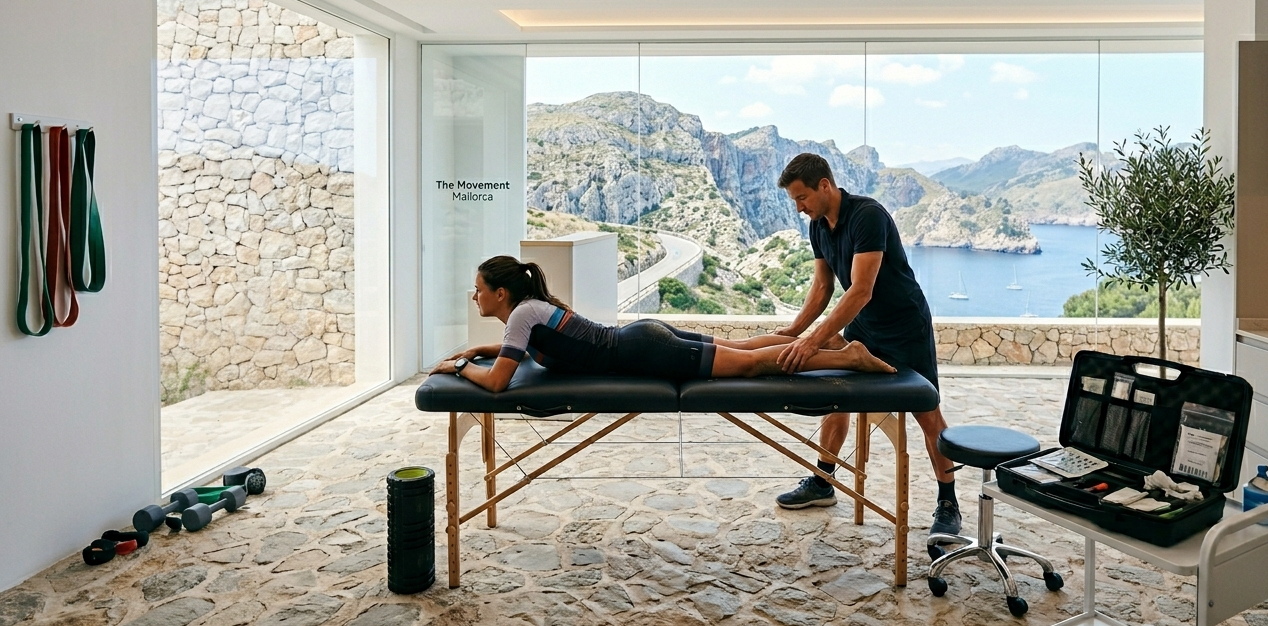
Mallorca's active population from competitive cyclists descending the Coll de Sa Batalla to weekend warriors tackling coastal trails faces injury patterns that require sport-specific knowledge. Tendon overload, muscle tears, joint sprains, stress fractures, and post-surgical rehabilitation each follow distinct recovery pathways that demand clinical precision rather than generic protocols.
The treatments available through The Movement Mallorca are built around exactly this philosophy: evidence-based, movement-informed, and tailored to the demands of each athlete.
The Physiotherapy Approach That Actually Accelerates Recovery
Speed of recovery is not about rushing through phases. It is about completing each recovery phase correctly so the next one builds on a solid foundation. Physiotherapy accelerates this process through manual therapy, targeted loading, neuromuscular retraining, and progressive return-to-sport programming.
Manual therapy including soft tissue work, joint mobilisation, and myofascial techniques reduces pain, restores range of motion, and removes the mechanical barriers to healing in the early stages. This is not passive treatment. It actively changes the tissue environment and the nervous system's response to injury.
Sports massage and myofascial release forms a critical part of this acute and sub-acute recovery window, particularly for cyclists and runners whose training volumes generate significant fascial and muscular restriction before the injury even presents clinically.
The Role of Osteopathy in Sports Injury Recovery
Osteopathy contributes a whole-body perspective that pure physiotherapy sometimes misses. A shoulder impingement in a swimmer, for example, may originate from thoracic restriction and rib mechanics rather than the shoulder joint itself. An osteopathic assessment identifies these distal contributors and treats the entire kinetic chain rather than the site of pain in isolation.
This integrated approach where osteopathic and physiotherapy principles work together shortens the overall recovery arc because it addresses causes, not just symptoms. The our approach page outlines how The Movement Mallorca brings these disciplines together in a way that is rarely available outside specialist sports clinics.
From Acute Injury to Return to Sport: The Recovery Roadmap
Effective sports injury treatment follows a structured progression. Phase one focuses on pain control, swelling reduction, and protecting the healing tissue while maintaining as much conditioning as possible through adapted training. Phase two reintroduces loading progressively, rebuilds strength and neuromuscular control, and addresses the movement dysfunctions that contributed to the injury. Phase three is sport-specific replicating the demands of the athlete's actual activity in a controlled environment before full return.
This roadmap requires clinical expertise, regular reassessment, and honest communication between the athlete and clinician. Skipping phases or progressing prematurely is the most common reason athletes re-injure within weeks of returning to training.
A performance analysis and athletic coaching assessment ensures the return-to-sport phase is not guesswork but a data-informed transition based on how your body actually moves under load.
Dry Needling and Targeted Manual Techniques for Faster Tissue Recovery
For acute muscle injuries and persistent trigger points that resist manual therapy alone, dry needling offers a precise intervention that resets the neuromuscular system and accelerates local tissue healing. It is particularly effective in the hamstring, gastrocnemius, and lumbar paraspinal muscles all high-frequency injury sites in Mallorca's cycling and running communities.
Combined with progressive exercise rehabilitation, dry needling shortens the painful inhibition phase that often stalls early recovery and prevents athletes from completing the loading they need to rebuild tissue capacity.
Why Location and Timing Matter for Sports Injury Treatment
One of the realities of training in Mallorca especially for visiting athletes on cycling or triathlon camps is that injuries happen mid-camp, mid-race-build, or mid-holiday. Access to immediate, high-quality sports physiotherapy is the difference between salvaging the rest of a training block and writing off the entire trip.
The Movement Mallorca operates from two locations: Puerto Portals and Santa Ponça, placing expert sports physiotherapy within reach of the island's most active zones. If you are dealing with an acute sports injury and need rapid assessment, contact the clinic directly to discuss same-day or next-day availability.
The Long-Term Investment: Injury Prevention as Performance Enhancement
The best sports injury treatment is the treatment you never need because you addressed the underlying vulnerabilities first. A biomechanical assessment identifies the movement deficiencies, strength asymmetries, and loading patterns that predispose specific athletes to specific injuries.
Investing in this kind of proactive evaluation particularly at the start of a new training season or before a major event pays dividends that no amount of reactive treatment can replicate. Athletes who understand how their body moves under load make smarter training decisions, recover more efficiently, and sustain higher performance across longer periods.
Whether you are a competitive cyclist, an expat runner, or a recreational tennis player, the path to staying active without repeated injury runs through professional assessment and personalised movement care. Book your appointment with The Movement Mallorca and take the proactive step that separates consistent performers from perpetual patients.
Frequently Asked Questions
How quickly can I get sports injury treatment in Mallorca?
The Movement Mallorca offers appointments across two locations Puerto Portals and Santa Ponça with availability tailored to both residents and visiting athletes. Contact the clinic directly for urgent or same-week appointments, particularly if you are mid-training camp or dealing with an acute injury.
Does physiotherapy actually speed up sports injury recovery or just manage pain?
High-quality physiotherapy does both, and they are not separate goals. Manual therapy, targeted loading, and neuromuscular retraining actively stimulate tissue healing, restore movement quality, and reduce the inhibitory pain response all of which directly accelerate recovery timelines compared to rest alone.
What is the difference between physiotherapy and osteopathy for sports injuries?
Physiotherapy typically focuses on targeted exercise prescription, manual therapy, and rehabilitation protocols specific to the injury site. Osteopathy takes a broader structural approach, assessing how the whole body's mechanics contribute to the injury. For sports injuries, an integrated approach using both disciplines produces the most complete and durable outcomes.
Can I train during sports injury rehabilitation?
In most cases, yes. A skilled sports physiotherapist will design a modified training plan that maintains cardiovascular fitness, strength, and sport-specific conditioning while protecting the healing tissue. Complete rest is rarely the optimal approach and often delays recovery by reducing tissue load tolerance.
What sports injuries do physiotherapists in Mallorca most commonly treat?
Common presentations include cycling-related knee pain (patellofemoral syndrome, ITB syndrome), running injuries (Achilles tendinopathy, plantar fasciitis, shin splints), shoulder injuries from racket sports and swimming, ankle sprains from trail and mountain activities, and lower back pain across almost all sports.
How do I know if I need physiotherapy or should go directly to a doctor?
For most sports injuries without clear signs of fracture, significant swelling, or neurological symptoms, physiotherapy assessment is the appropriate first step. A qualified sports physiotherapist can screen for conditions that require medical referral and will do so when clinically indicated. Starting with physiotherapy generally leads to faster assessment and earlier active treatment than waiting for a GP referral.