What Sports Massage Costs at Puerto Portals (and How Often You Actually Need One)
A sports massage session in Puerto Portals typically costs between €60 and €90 for a 60-minute treatment, with prices varying based on the therapist's experience and whether the session targets a specific injury or general maintenance. Most active people benefit from a session every two to four weeks, while athletes in heavy training blocks often need weekly sessions. The right frequency depends on training load, recovery speed, and whether you're managing an existing issue or preventing one.
If you live or work near the marina and train regularly, you've probably wondered whether the price tag is worth it. Sports massage isn't a spa treatment. It's a targeted tool that helps muscles recover faster, reduces tightness before it turns into an injury, and keeps your movement quality consistent week to week. Clinics like The Movement Mallorca see this question often from clients balancing training with busy lives in and around Puerto Portals.
What Sports Massage Costs at Puerto Portals?
Pricing in this part of Mallorca reflects the area's mix of tourists, expats, and serious amateur athletes. A single 30-minute session focused on one problem area, like a tight calf or a stiff neck, usually runs €35 to €50. A full 60-minute session covering the whole body, or targeting multiple muscle groups after a race or long training week, sits closer to €60 to €90. Package deals bring the per-session cost down significantly. Clinics offering four or six-session bundles often reduce the price by 10 to 20 percent, which makes sense if you're training for something specific like a triathlon, a hiking season, or off-season strength work. Understanding what a physio session in Mallorca actually costs helps you compare sports massage pricing against physiotherapy, since the two often overlap when an injury is involved.
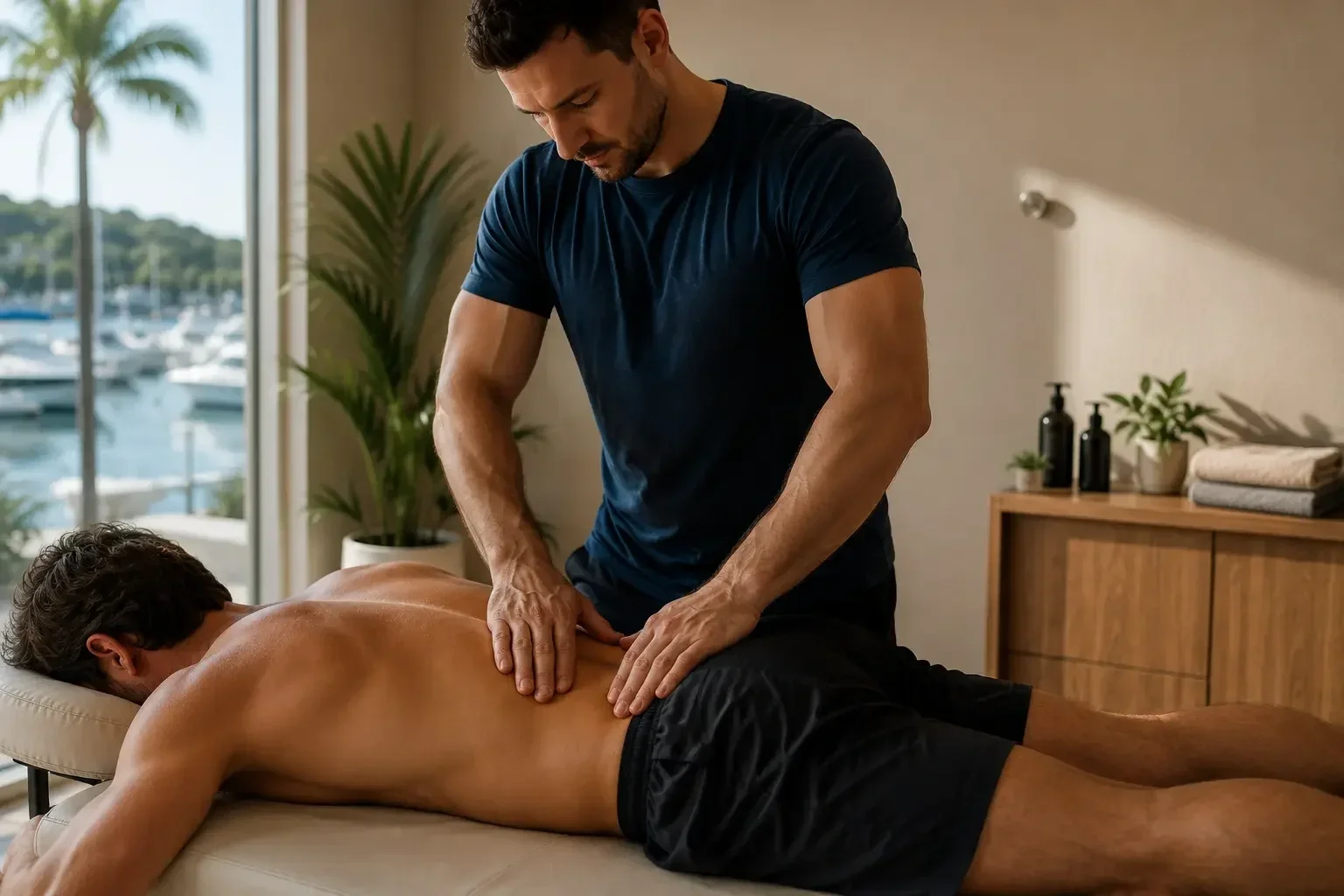
The bigger cost question isn't really the euro amount. It's whether you're paying for maintenance or paying to fix something that got worse because you waited too long.
How Training Load Affects Your Massage Frequency?
Your ideal frequency depends heavily on training volume, sport type, and recovery capacity, three factors that matter more than any generic "once a month" rule. Someone running 20 kilometers a week has very different tissue demands than someone doing daily CrossFit or padel three times a week.
As a rough guide:
Casual exercisers (2-3 sessions a week): once every 4-6 weeks
Regular athletes (4-5 sessions a week): every 2-3 weeks
Competitive athletes or heavy training blocks: weekly or biweekly
Post-injury recovery phase: as advised by your therapist, often more frequent short-term
These aren't rigid rules. Someone recovering from a hamstring strain might need two sessions a week for a month, then taper down. Learning how to prevent knee and back injuries on the trails is often part of the same conversation, since massage works best alongside good movement habits, not instead of them.
Puerto Portals attracts a lot of sailors, padel players, and runners who train year-round in the Mediterranean climate. That consistency is great for fitness, but it also means small imbalances build up quietly. A therapist who sees you regularly catches those patterns before they become the reason you're on the table for an actual injury instead of maintenance.
Sports massage also pairs well with other recovery work. Many clients combine it with sports injury treatment in Mallorca when something has already gone wrong, using massage to speed up the healing timeline alongside hands-on rehab.
What Actually Drives the Price Difference Between Clinics?
Not all sports massage sessions are priced the same way, even within Puerto Portals itself. A few factors explain most of the variation you'll see when comparing clinics.
Therapist qualifications matter most. A massage therapist with a sports science background or years of experience working with competitive athletes typically charges more than someone offering general massage. That premium usually reflects real expertise, particularly when it comes to identifying compensations before they become injuries.
Location within the area also plays a role. Clinics closer to the marina or attached to premium fitness facilities often charge slightly more than those a short drive inland, simply due to rent and clientele. This doesn't necessarily mean better treatment, so it's worth asking about the therapist's background rather than assuming price reflects quality automatically.
Session length and technique intensity change the price too. A deep tissue session focused on breaking down adhesions and scar tissue takes more skill and physical effort than a lighter maintenance massage, and pricing usually reflects that difference. If you're recovering from a specific injury, expect to pay slightly more for a session that includes assessment time alongside the hands-on work.
Finally, some clinics bundle massage with other services like mobility screening or basic movement assessment. This can feel like a higher upfront cost, but it often saves money long-term by catching issues that would otherwise require a separate appointment.
Why the Price Is Usually Worth It for Active People?
Think of sports massage as preventative maintenance rather than a luxury. Tight, overworked muscles pull unevenly on joints, and over months that uneven pull is exactly how overuse injuries start. Paying €70 now is almost always cheaper than paying for weeks of missed training and rehab later.
The value also compounds. A therapist who works on you regularly builds a map of your body: which side is tighter, which movement pattern you favor, where old injuries still show up under stress. That knowledge makes every future session more effective, because they're not starting from zero each time.
If you're weighing massage against other recovery tools, it helps to understand the full picture of care available locally. Reading about how our physiotherapist in Mallorca helps you regain mobility gives useful context on where massage fits alongside physiotherapy, mobility work, and structured rehab plans.
For anyone training seriously in or around Puerto Portals, the smartest approach is to think in seasons rather than single sessions. Build massage into your training calendar the same way you'd schedule a long run or a strength session, not just something you book after pain shows up.
Signs Your Current Frequency Isn't Enough
Some warning signs suggest your massage schedule needs adjusting before an actual injury forces the issue. Recognizing these early can save weeks of downtime.
Persistent tightness that doesn't fully release between sessions is one of the clearest signals. If a muscle group feels just as tense at the start of your next appointment as it did at the end of the last one, your current frequency likely isn't keeping pace with your training load.
Reduced range of motion in specific joints, especially the hips, shoulders, or ankles, often points to accumulated tightness that regular massage alone can address if caught early. Waiting too long usually means the issue graduates from a massage table fix to a full rehab program.
Performance plateaus can also be a subtle sign. Athletes who suddenly stop improving despite consistent training sometimes find that tight, restricted tissue is limiting their range of motion enough to cap performance, even when strength and cardiovascular fitness keep improving.
If any of these sound familiar, it's worth having an honest conversation with your therapist about adjusting frequency rather than waiting for pain to force the decision.
Finding the Right Therapist Near Puerto Portals
Not every massage therapist has the same training. Sports massage requires a different skill set than relaxation massage, focused on deep tissue work, trigger point release, and an understanding of how specific sports load the body differently. A padel player's shoulder needs different attention than a cyclist's hip flexors.
Look for a clinic with therapists trained in sports-specific work, ideally ones who also offer functional training in Mallorca so recovery and performance work are handled under one roof. This matters if you ever need to transition from massage into rehab exercises or strength work without switching providers mid-recovery.
Ask about the therapist's background before booking. Someone who's worked with runners, swimmers, or racket sport athletes will spot compensations that a generalist might miss. A good first conversation should include questions about your training schedule, past injuries, and goals, not just where it hurts today.
If cost is a concern, ask about package pricing upfront rather than booking single sessions repeatedly. Most clinics are happy to structure a plan around your training calendar rather than a fixed weekly slot, especially if you explain your season and goals clearly.
For anyone unsure whether massage or a full physiotherapy assessment makes more sense right now, exploring the athlete's guide to recovery for everyday active lives is a good starting point. It breaks down which recovery tools suit which situations, so you're not guessing.
Sports massage pricing in Puerto Portals sits within a normal range for the Balearics, and the real decision isn't about finding the cheapest option. It's about matching frequency to your actual training demands and choosing a therapist who understands sport-specific movement, not generic relaxation technique.
If you're training regularly and haven't booked a maintenance session in over a month, that's usually a sign it's time. Small tightness now is far easier to resolve than the injury it can become later. Book an appointment, mention your training schedule, and let a qualified therapist help you build a recovery plan that actually fits your season.
Frequently Asked Questions
How much does a sports massage cost in Puerto Portals? Most 60-minute sessions cost between €60 and €90, with shorter 30-minute sessions ranging from €35 to €50 depending on the clinic and therapist experience.
How often should athletes get a sports massage? Competitive athletes in heavy training often benefit from weekly or biweekly sessions, while casual exercisers usually do well with one session every four to six weeks.
Is sports massage covered by insurance in Mallorca? Coverage varies by provider and policy. Some private health insurance plans reimburse sports massage when prescribed alongside physiotherapy, so it's worth checking with your insurer directly.
What's the difference between sports massage and regular massage? Sports massage focuses on deep tissue work, trigger points, and movement patterns specific to athletic activity, while relaxation massage prioritizes general stress relief with lighter pressure.
Can sports massage help prevent injuries? Yes. Regular sessions identify and release tight or imbalanced muscles before they cause compensations that lead to strains, tendonitis, or joint pain.