How to Prevent Knee and Back Injuries on the Trails
Mallorca's trails are extraordinary rugged mountain paths, coastal routes, and forest tracks that draw hikers, runners, and cyclists from across the world. But the same terrain that makes trail movement so rewarding is also the terrain that breaks knees and backs. Whether you tackle the Serra de Tramontane weekly or explore Mallorca's coast on weekends, knowing how to protect your body is not optional. It is the foundation of sustainable trail performance.
How Knee and Back Injuries Happen on the Trail
Trail surfaces are unpredictable by nature. Uneven ground, sharp descents, loose rock, and sudden lateral shifts place enormous repetitive load on the knee joints and lumbar spine. Most trail injuries are not dramatic falls. They are the product of accumulated stress on tissues that were never properly prepared.
The knee absorbs enormous force on downhill sections, where quadriceps decelerate the body weight multiplied by gravity. The lower back compensates for every imbalance below it tight hips, weak glutes, and poor ankle mobility all transfer strain upward into the lumbar discs and facet joints. When those compensations compound over kilometers, injury is a matter of when, not if.
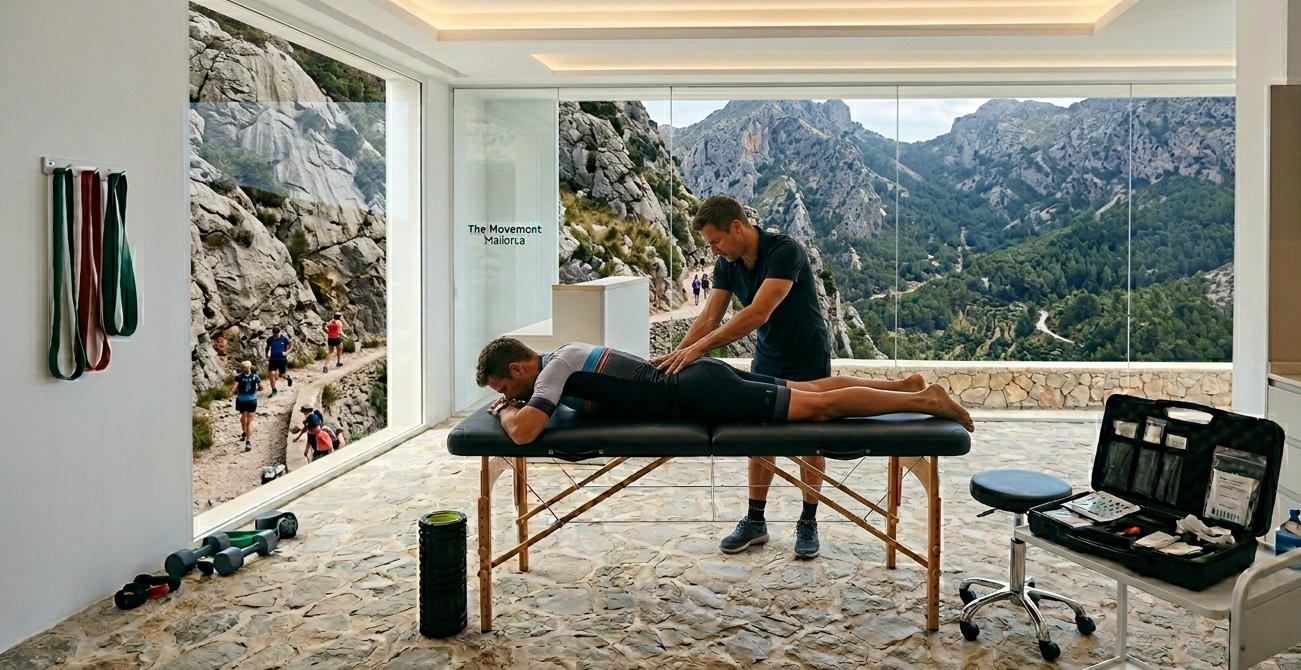
Understanding this chain is the first step. Getting the right physiotherapy and osteopathy treatment before an injury becomes chronic is the smarter second step.
Build the Foundations Before You Hit the Trail
Prevention starts in the clinic and in the gym, not on the trail itself. Strength is the single most protective factor for both the knee and the lumbar spine. Specifically, building quad, hamstring, glute, and single-leg stability capacity reduces the mechanical load that trails impose.
Equally important is spinal mobility and hip control. When your hips are stiff and your thoracic spine cannot rotate, your lower back absorbs that restriction. Over time, those forces accumulate into disc compression and muscle guarding.
A structured exercise rehabilitation programmer personalized to your movement patterns and trail demands is the most direct way to identify and correct the weak links before they become injury sites.
Master Your Trail Technique and Body Mechanics
Technical running and hiking form protects the joints more than any brace or supplement. On descents, keep a slight forward lean, use shorter strides, and land with a soft knee rather than a locked joint. On ascents, drive through the heel and engage the glutes rather than pulling with the lower back.
Cadence matters too. Slower trail runners with long strides generate considerably more knee impact than those running at a higher cadence with shorter ground contact. Minor technique adjustments produce significant reductions in cumulative load.
If you have noticed your knees tracking inward or your lower back arching on longer efforts, a biomechanical assessment can identify exactly what your body is compensating for and where those compensations originate.
Load Management: The Most Underestimated Prevention Tool
The majority of trail knee and back injuries are overuse injuries. They happen when training volume increases faster than tissue adaptation. A 20% weekly mileage increase rule is a useful guideline, but it does not account for elevation gain, trail surface difficulty, or how well you slept.
Listen to stiffness signals. Morning joint stiffness that takes more than ten minutes to resolve, or persistent soreness that does not clear within 48 hours, are early warning signs that load has outpaced recovery.
Recovery is not passive rest. Active recovery, soft tissue work, and structured downtime are what allow tissue remodeling to occur. Sports massage and myofascial release plays a direct role in accelerating this process, reducing overload in the ITB, hip flexors, thoracolumbar fascia, and posterior knee structures that take the most trail punishment.
Mobility and Warm-Up Protocols That Actually Work
A proper trail warm-up is not five minutes of static stretching. It is a progressive activation of the systems you are about to stress. Hip circles, glute bridges, lateral band walks, and thoracic rotations prepare the neuromuscular system for the demands ahead.
Post-trail, prioritise hip flexor lengthening, posterior chain release, and thoracic extension to counteract the forward-loaded position that trails impose over time. Consistency with these protocols compounds over weeks and months into meaningful injury resilience.
When to Seek Professional Help
Pain that persists beyond two to three days, swelling around the knee joint, sharp lumbar pain on movement, or any neurological symptoms such as tingling or numbness down the leg should prompt a professional assessment. Waiting does not make these resolve faster. It allows compensatory patterns to become ingrained.
The earlier a physiotherapist identifies the root cause, the shorter and less complex the recovery. Trail injuries that are caught early rarely require imaging or extended rest. They require targeted treatment, load modification, and a clear return-to-trail plan.
If you are based in or visiting Mallorca and need expert assessment, book an appointment with the team and get a clear picture of where your body stands before your next trail session.
Closing Thoughts
Preventing knee and back injuries on the trails is not about doing less. It is about preparing better, moving smarter, and recovering with intention. The terrain will always challenge your body. Your job is to build a body that rises to that challenge consistently. Start with a proper structural assessment, invest in targeted strength work, respect your load thresholds, and treat the early warning signs before they become setbacks. The trails will still be there athe goal is making sure you are too.
Frequently Asked Questions
What are the most common knee injuries from trail running and hiking?
The most frequent knee injuries in trail athletes include iliotibial band syndrome, patellofemoral pain (runner's knee), patellar tendinopathy, and medial meniscus irritation. Most arise from a combination of training load spikes, weak hip stabilisers, and poor downhill mechanics rather than any single traumatic event.
Can physiotherapy prevent knee injuries before they happen?
Yes. A pre-injury physiotherapy assessment identifies muscle imbalances, movement restrictions, and loading patterns that place the knee at risk. Targeted exercise, manual therapy, and technique coaching can significantly reduce injury probability, particularly in trail athletes who train consistently on varied terrain.
How do I know if my lower back pain is serious enough to see a physiotherapist?
Any back pain that persists more than three days, worsens with movement, or is accompanied by leg pain, numbness, or tingling warrants a professional assessment. Even pain that seems mild but recurs after trail sessions is worth investigating, as recurring patterns indicate an underlying biomechanical issue that will worsen without intervention.
Does trail surface affect knee and back injury risk?
Significantly. Loose rock, steep descents, and camber (angled trail surfaces) all increase lateral and rotational stress on the knee and spine. Hard-packed or paved surfaces generate higher impact forces, while soft trails reduce impact but increase proprioceptive demand. Varying trail surfaces is protective, but requires strong ankle stability and hip control.
How long does it take to recover from a trail-related knee injury?
Recovery timelines vary widely depending on the injury type, severity, and how promptly treatment began. Mild overuse conditions such as patellofemoral pain often resolve in four to six weeks with appropriate physiotherapy. More complex issues like meniscal involvement or disc-related back pain may require eight to twelve weeks or longer. Early intervention is the strongest predictor of faster return to trails.
Should I use trekking poles to protect my knees on trails?
Trekking poles meaningfully reduce compressive knee load on both ascents and descents, particularly for hikers carrying weight or with pre-existing knee conditions. However, they should complement rather than replace strength development. Over-reliance on poles without addressing the underlying hip and quad weakness that creates knee vulnerability is a short-term fix rather than a long-term solution.