How to Treat Ankle Pain from Uneven Ground in Palma
Navigating Palma de Mallorca’s distinct terrain, ranging from historic, uneven cobblestone alleys to cambered coastal paths, requires continuous lower-limb adaptation. While walking these scenic routes is a hallmark of the island experience, prolonged ambulation on unyielding, irregular surfaces significantly increases the risk of acute or cumulative ankle pain.
Biomechanically, the ankle complex must constantly adjust to rapid changes in surface height and structural angles. When traversing uneven paving, the joint relies heavily on lateral stability mechanisms:
Proprioceptive Fatigue: As muscles tire during long walks, the nervous system's ability to signal rapid micro-adjustments slows down.
Ligamentous Strain: Delayed muscular stabilization shifts the mechanical load directly onto the ankle ligaments (such as the anterior talofibular ligament), leading to micro-tears, inflammation, and localized pain.
Joint Overload: Repetitive ground reaction forces on uneven surfaces can stress the talocrural and subtalar joints, causing acute discomfort or exacerbating pre-existing structural weaknesses.
In many cases, the discomfort is temporary. Rest and gentle movement can help reduce pain. If the problem continues, professional treatment may be helpful. The Movement Mallorca’s Specialists explain treatment options and recovery strategies in their physiotherapy clinic guide in Palma. Understanding why ankle pain occurs can help you recover faster and prevent injuries in the future.
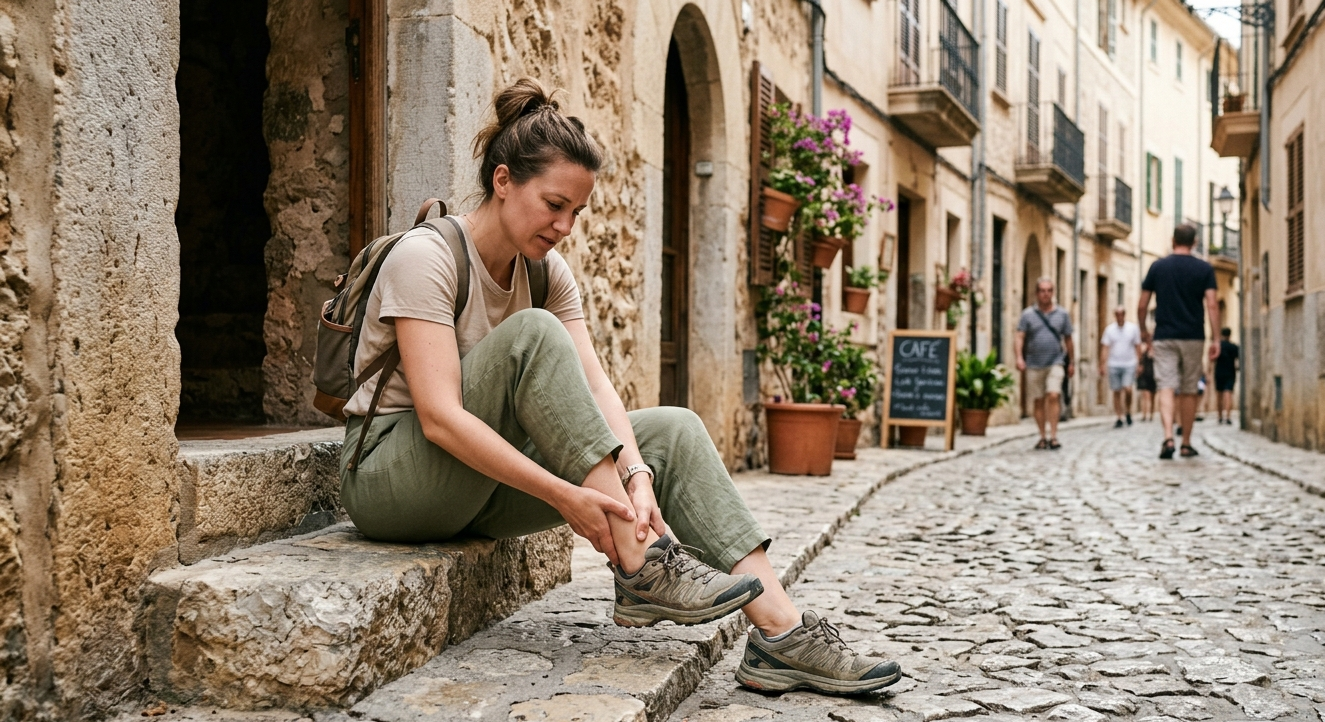
What Should You Do If Your Ankle Hurts After Walking on Uneven Ground in Palma?
Walking on uneven terrain places additional stress on the ankle joint. Each step requires the muscles and ligaments to stabilize the body while adapting to surface changes.
If the ankle twists slightly or the stabilizing muscles become fatigued, irritation can develop. This irritation often causes pain, swelling, or stiffness.
The first step is reducing stress on the joint. Resting the ankle for a short period allows tissues to calm down. Applying ice and elevating the foot can also reduce inflammation.
Movement specialists often emphasize the importance of joint mechanics in preventing injury. A helpful explanation can be found in this article on how movement mechanics influence long-term injury prevention. Learning how the body moves during walking can significantly reduce injury risk.
Why does my ankle hurt when I walk on uneven ground?
Uneven ground forces the ankle to stabilize your entire body weight while adjusting to constant changes in surface height.
Instead of moving forward smoothly, the joint tilts and rotates to maintain balance. Over time, this repetitive stress can irritate ligaments and tendons.
Several factors may increase the chance of ankle pain:
Weak stabilizing muscles
Limited ankle mobility
Previous ankle injuries
Poor footwear support
Muscle fatigue from long walks
Improving flexibility and mobility is one of the best ways to reduce joint stress. Physiotherapists often recommend exercises similar to those discussed in these mobility exercises that help reduce pain and improve movement
Regular mobility training allows the ankle joint to adapt better to uneven terrain.
How to fix ankle pain after walking?
When ankle pain appears after walking, early care is important. Ignoring discomfort can sometimes worsen the injury.
Rest is the first step. Limiting weight on the ankle allows inflamed tissues to recover. Ice can help reduce swelling, especially during the first 24 to 48 hours.
Once pain improves, gentle movement becomes important. Controlled exercises help restore normal joint function and prevent stiffness.
Many rehabilitation programs also include strengthening exercises. These programs often resemble techniques described in functional training strategies used for injury recovery
Strengthening the muscles around the ankle improves stability and reduces the chance of future injuries.
Massage therapy can also support recovery. Some patients benefit from soft tissue treatments that improve circulation and muscle relaxation. You can read more about these effects in this guide on the benefits of sports massage for recovery
Is Voltaren good for ankle sprains?
Voltaren is a topical anti-inflammatory medication commonly used for muscle and joint pain. It contains diclofenac, which helps reduce swelling and inflammation.
For mild ankle sprains, Voltaren gel may temporarily reduce discomfort. It is often applied directly to the affected area several times per day.
However, medication alone does not correct the underlying issue. If the ankle joint remains weak or unstable, pain may return.
Many physiotherapists combine medication with rehabilitation and manual therapy. Clinics sometimes integrate treatment approaches similar to those discussed in this overview of integrated osteopathy and physiotherapy care. Addressing the root cause of pain helps ensure long-term recovery.
How do I tell if my ankle is sprained?
An ankle sprain occurs when the ligaments supporting the joint stretch beyond their normal range or tear.
This often happens when the foot suddenly rolls inward or outward on uneven ground.
Common symptoms include:
Pain around the ankle
Swelling or tenderness
Bruising
Difficulty walking
Reduced range of motion
Mild sprains may still allow walking, although discomfort remains. Moderate or severe sprains can make standing difficult.
In these situations, professional evaluation is recommended. Movement specialists assess joint mobility, muscle strength, and stability.
Preventing ankle pain while walking in Palma
Prevention is always better than recovery. Strengthening the muscles around the ankle improves stability and balance.
Wearing supportive shoes is also essential when walking on uneven surfaces. Footwear with good arch support helps absorb shock and reduce stress on the joint.
Maintaining good posture and body mechanics while walking can also prevent strain. If posture problems contribute to pain, this guide on how correcting posture can reduce back and joint discomfort may be helpful. Small changes in movement habits can make a significant difference.
Conclusion
Walking through Palma’s historic streets and coastal trails is a memorable experience, but uneven surfaces can sometimes lead to ankle discomfort.
Most mild cases improve with rest, ice, and gentle mobility exercises. However, persistent pain should not be ignored.
Professional physiotherapy can identify the root cause and guide a safe rehabilitation plan. With proper care and strengthening, most people recover quickly and return to walking without discomfort.
If ankle pain continues after exploring Palma, seeking expert guidance can help protect your joints and prevent long-term problems. Book a Consultation Today!
FAQ
Can uneven ground cause ankle injuries?
Yes. Uneven surfaces force the ankle to constantly adjust its position, which increases stress on ligaments and muscles.
How long does ankle pain last after walking?
Mild discomfort may improve within a few days. Sprains or ligament injuries can take several weeks to heal.
Should I keep walking with ankle pain?
If pain is mild, short rest periods may help. Persistent pain or swelling should be evaluated by a professional.
What helps ankle pain recover faster?
Rest, ice, elevation, gentle mobility exercises, and physiotherapy can help speed recovery.
When should I see a physiotherapist?
If swelling, bruising, or difficulty walking occurs, professional evaluation is recommended.