Women's Health Physiotherapy in Mallorca: Postpartum & Pelvic Floor Recovery
Bringing a baby into the world changes the body in ways that often go unspoken until a new mother is already experiencing them firsthand. Back pain that will not settle, a weak pelvic floor, or discomfort during everyday movements are all common after birth, yet many women are simply told these symptoms are normal and left to manage on their own. At The Movement Mallorca, our physiotherapists work with new mothers across the island to change that expectation and provide real, structured support during postpartum recovery.
Women's health physiotherapy addresses the specific physical changes that pregnancy and childbirth bring, from abdominal separation to pelvic floor weakness, in a way that general physiotherapy often overlooks. This article covers what postpartum recovery through physiotherapy actually involves, the most common issues we treat, and why addressing them early makes such a meaningful difference to long term wellbeing.
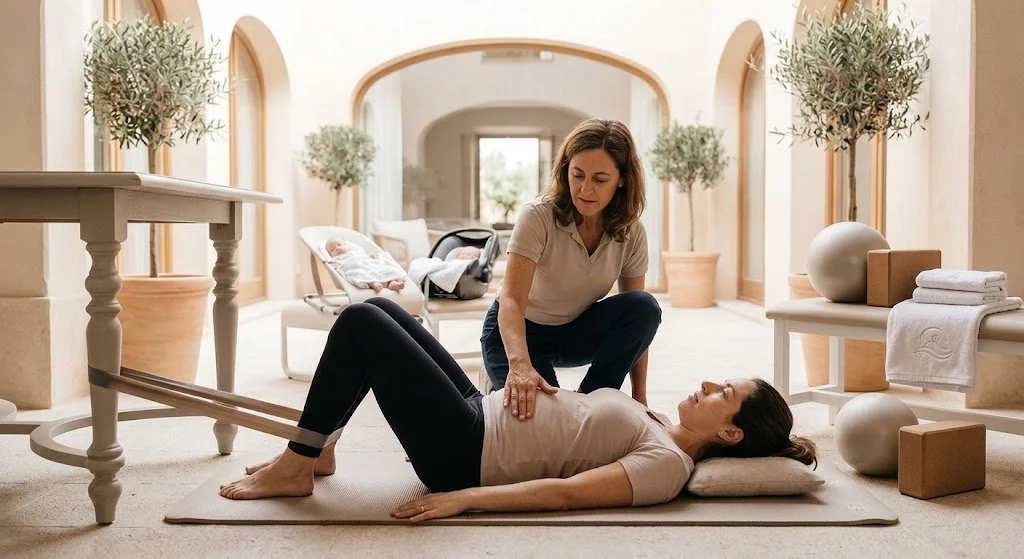
Why Postpartum Recovery Deserves Dedicated Attention?
Pregnancy places significant strain on the pelvic floor, abdominal muscles, and lower back over nine months, and childbirth itself adds another layer of physical demand regardless of whether delivery was vaginal or by caesarean section. The body does not simply reset once the baby arrives. Muscles that were stretched and weakened need a structured rebuilding process, much like any other injury would require.
Many new mothers push through discomfort because they are focused entirely on caring for their newborn, or because they assume symptoms like leaking with a cough or persistent lower back pain are simply part of motherhood. In reality, these are treatable issues, and addressing them within the first months after birth typically leads to a faster and more complete recovery than waiting years and hoping things improve on their own.
Common Issues We Treat With Women's Health Physiotherapy in Mallorca
Pelvic floor dysfunction is one of the most frequent concerns we see, presenting as urinary leakage, a feeling of heaviness, or reduced core stability. Diastasis recti, the separation of the abdominal muscles that occurs during pregnancy, is another common issue that affects core strength and can contribute to ongoing back pain if left unaddressed.
Lower back and pelvic girdle pain often persists well beyond birth, particularly in mothers who return to lifting, carrying, and bending before the deep core and pelvic floor have properly recovered. Scar tissue discomfort following a caesarean section is another area where targeted physiotherapy makes a genuine difference, since restricted scar mobility can contribute to ongoing tension through the abdomen and lower back.
Pelvic Floor Recovery and Core Rehabilitation After Birth
Rebuilding pelvic floor strength requires more than generic exercises found online, since every woman's recovery depends on her specific delivery experience, muscle tone, and any tearing or surgical repair involved. A proper assessment identifies whether the pelvic floor is weak, overly tense, or a combination of both, since the treatment approach differs significantly depending on which pattern is present.
Core rehabilitation follows a similar principle of building from the inside out. Rather than jumping straight into intense abdominal exercises, we guide new mothers through a progression that restores deep core function first, which protects the lower back and supports a safe return to more demanding movement over time.
How We Approach Treatment at The Movement Mallorca?
Every postpartum assessment through our physiotherapy treatments begins with understanding your birth history, current symptoms, and personal goals, whether that means returning to running, lifting your toddler without pain, or simply feeling more confident in your body again. This individualised starting point shapes everything that follows in your recovery plan.
Manual therapy plays a role in addressing tension patterns that build up from months of altered posture and movement during pregnancy, while a structured exercise progression rebuilds strength safely without overloading tissue that is still healing. Our clinic's broader guide on how our physiotherapists help you regain mobility reflects the same principle of gradual, well sequenced progress that guides our postpartum programmes.
For mothers who experienced a more complex delivery or ongoing pain, understanding the full picture matters. Our comparison of osteopathy versus physiotherapy can help clarify which approach, or combination of both, suits your specific recovery needs during this stage.
What to Expect From Your First Session`?
Walking into a first appointment after having a baby can feel daunting, particularly if you are unsure what a session will actually involve. Our page on what to expect at your first physiotherapy session outlines the process in detail, and the same principles apply for postpartum care, with extra time set aside to discuss your birth story and any concerns specific to this stage of recovery.
Sessions typically combine a hands on assessment with practical guidance you can apply at home between appointments, since consistency with a small number of well chosen exercises tends to produce far better results than an overwhelming list you cannot realistically maintain with a newborn at home.
When to Start Physiotherapy After Birth?
Many women can begin gentle pelvic floor and breathing work within the first weeks after birth, even before a formal clearance appointment, as long as the approach is appropriately gentle and guided. More structured strengthening work generally begins once initial healing has progressed, though the right timeline always depends on your specific delivery and recovery.
There is no expiry date on postpartum physiotherapy. Whether your baby is six weeks old or six years old, addressing pelvic floor weakness, core dysfunction, or persistent back pain still produces meaningful improvement. Many of the mothers we see are well past the newborn stage and simply reached a point where ongoing symptoms became too disruptive to ignore any longer.
Returning to Exercise and Active Life
Returning to running, group fitness classes, or padel after having a baby should follow a structured progression rather than a sudden jump back to pre pregnancy activity levels. Our approach to functional training for injury recovery applies directly to this stage, building strength and control in a way that supports a safe, sustainable return to the activities you enjoyed before pregnancy.
Rushing this stage is one of the most common reasons pelvic floor symptoms resurface months after they initially seemed to improve. A gradual, well guided return protects the progress you have already made and reduces the likelihood of setbacks once you increase training intensity.
Final Thoughts
Postpartum recovery deserves the same structured, professional attention as any other significant physical event, yet it is too often dismissed as something women should simply endure. Whether you are dealing with pelvic floor weakness, abdominal separation, or persistent back pain months or even years after birth, women's health physiotherapy offers a genuine path toward feeling strong and comfortable in your body again.
If you are ready to address postpartum symptoms that have been affecting your daily life, book an appointment with The Movement Mallorca and start a recovery plan built specifically around your body and your goals.
Frequently Asked Questions
When should I start pelvic floor physiotherapy after giving birth?
Gentle work can often begin within the first few weeks after birth, while more structured strengthening usually follows initial healing. A physiotherapist can guide the right timeline for your specific situation.
Is it too late to see a physiotherapist if my baby is already a toddler?
No. Pelvic floor and core symptoms respond to treatment regardless of how much time has passed since delivery, and many women see significant improvement well after the newborn stage.
Can physiotherapy help with diastasis recti?
Yes. A structured core rehabilitation programme helps restore function to the abdominal muscles and can meaningfully reduce the visible gap and associated back pain over time.
Does postpartum physiotherapy help after a caesarean section?
Yes. Scar tissue mobility work and core rehabilitation are both important after a caesarean, since the abdominal muscles and surrounding tissue still need structured recovery support.
How many sessions of postpartum physiotherapy will I need?
This depends on your specific symptoms and goals, though most women notice meaningful progress within four to six sessions when paired with consistent home exercises.