Hiking Injuries in the Serra de Tramuntana: When to See a Physiotherapist
The Serra de Tramuntana draws hikers from every corner of the island and beyond, and it is easy to see why. Dramatic ridgelines, centuries old stone paths, and views that stretch across the Mediterranean make it one of the best walking destinations in Europe. What many hikers do not expect is how demanding the terrain actually is on the body, especially on knees, ankles, and the lower back. At The Movement Mallorca, we treat a steady stream of hikers each month who pushed through a niggle on the trail and ended up with an injury that took far longer to heal than it should have.
Uneven cobbled paths, long steep descents, and sudden weather changes all place unusual stress on joints that are not used to that kind of terrain. Someone who runs comfortably on flat pavement back home can still struggle badly on a rocky descent from Deia to Soller. This article explains the most common hiking injuries we see from the Tramuntana range, why they happen, and the point at which a home remedy is no longer enough and a proper physiotherapy assessment becomes the smarter option.
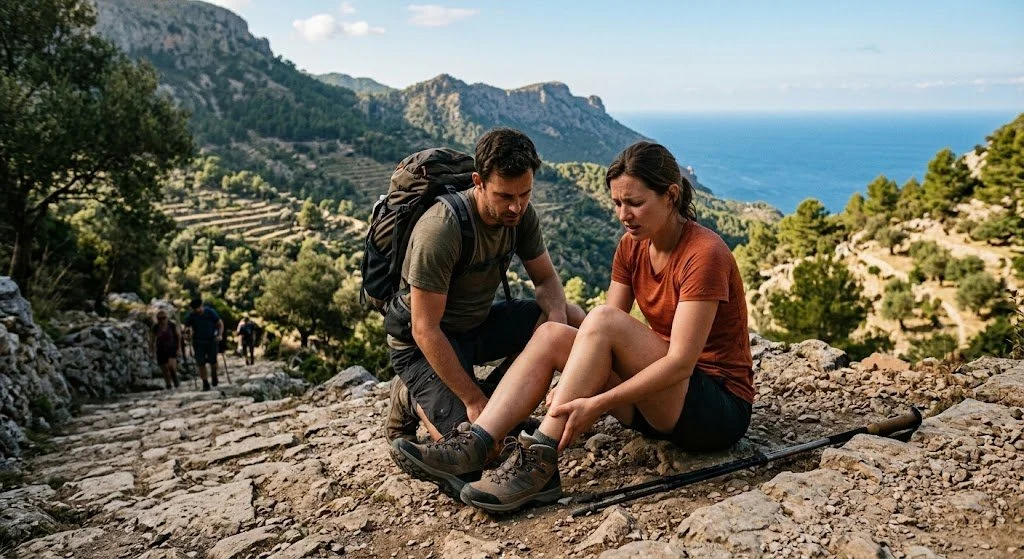
Hiking Injuries in the Serra de Tramuntana Are More Common Than People Expect
Most visitors underestimate the physical demand of the range because the mountains look manageable from a distance. In reality, many of the classic routes involve thousands of metres of elevation change over loose rock, ancient stone steps, and narrow goat tracks that shift underfoot. That combination of uneven footing and sustained downhill walking is exactly the pattern that overloads the knees, ankles, and lower back.
The heat is another factor that catches hikers off guard. Even in the cooler months, a midday sun on an exposed ridge can lead to dehydration and muscle fatigue much faster than expected. Tired muscles stabilise joints less effectively, which raises the risk of a rolled ankle or a knee twist during the final stretch of a long day out on the trail.
The Most Common Injuries We See From the Trails
Ankle sprains top the list by a wide margin, usually from a misplaced step on loose stone rather than a dramatic fall. Knee pain, particularly on long descents, is the second most frequent complaint, often caused by the repetitive impact of stepping down uneven terrain for hours at a time. Lower back strain rounds out the top three, typically linked to carrying a heavy pack over long distances without proper conditioning beforehand.
Less obvious but just as common are overuse injuries in the hip flexors and calves, which build up gradually over a multi day hiking trip rather than appearing after a single walk. These injuries are sneaky because the pain often does not peak until a day or two after the hike, once the body has had time to register the cumulative strain.
Physiotherapy in Mallorca for Active Hikers and Trail Runners
Recognising when a niggle needs professional attention rather than a day of rest can save weeks of frustration. Our approach to sports physio in Mallorca starts with understanding exactly which movements and terrain triggered the pain, since a knee that hurts on descents but feels fine on flat ground points to a very different problem than one that aches constantly.
We regularly treat expats and visitors who arrive mid holiday with an injury that flared up on day two of a multi day trek. Getting an accurate diagnosis quickly means the difference between resting for a day and finishing the trip, or pushing through and turning a mild strain into a much longer recovery once they are back home.
What Causes These Injuries on Mountain Terrain ?
Weak ankle stabilisers are one of the biggest contributors to sprains on the Tramuntana trails. Someone who spends most of the year on flat, predictable surfaces simply has not trained the small muscles around the ankle that respond to sudden shifts in footing. The stone paths in the mountains demand constant micro adjustments that untrained ankles struggle to keep up with.
Poor footwear choice makes an already demanding trail even harder on the joints. Trainers with minimal ankle support or worn out tread offer far less protection than a proper hiking boot, and the difference becomes obvious the moment the trail turns rocky. Carrying too much weight relative to fitness level adds further strain to the knees and lower back, particularly on the long descents that define many of the range's most popular routes.
Insufficient preparation before a big hike is the underlying theme across nearly every case we see. Jumping straight into an eight hour trek without building up distance and elevation gradually leaves muscles and tendons unprepared for the specific demands of mountain walking, even in hikers who consider themselves generally fit.
Treatment Options for Trail Related Injuries
An accurate assessment is the first step toward proper recovery, since knee pain from the trail can stem from several different structures including the meniscus, the IT band, or the patellar tendon. Our team examines your walking pattern, joint range, and muscle strength to pinpoint the actual source rather than guessing at a generic diagnosis. From there we build a plan through our physiotherapy treatments that targets the specific tissue involved.
For ankle sprains, early treatment focused on controlled movement and gradual strengthening produces far better long term stability than prolonged rest and immobilisation. Guidance from our page on treating ankle pain from uneven ground covers the same principles that apply directly to trail related sprains, since the mechanism of injury is nearly identical.
Lower back strain from carrying a pack usually responds well to manual therapy combined with targeted core and hip strengthening, which reduces the load placed directly on the spine during long walks. Runners who push into trail running as well as hiking often benefit from reviewing our guidance on Achilles tendon care for runners , since the tendon stress from downhill running shares many of the same risk factors as aggressive trail descents.
Preventing Injuries Before Your Next Hike
Building up hiking volume gradually gives tendons and stabilising muscles time to adapt to the demands of uneven terrain. Rather than jumping straight into a full day route, spending a few weeks on shorter local walks helps condition the ankles and knees for what the mountains will eventually ask of them. This single change prevents more injuries than almost any other adjustment hikers can make.
Strengthening the ankles, hips, and core before a hiking trip pays dividends on every descent. A simple routine covered in our guide to mobility exercises to reduce pain and stay active gives the stabilising muscles around each joint the resilience needed to handle sudden shifts in footing without giving way.
Choosing proper footwear with good ankle support and adequate tread depth reduces sprain risk significantly on the loose rock found throughout the range. Packing sensibly, staying hydrated, and building rest breaks into longer routes rounds out a sensible prevention strategy that keeps most hikers injury free even on the more demanding trails.
When to See a Physiotherapist?
Pain that persists more than a couple of days after a hike, swelling that does not settle with rest and elevation, or any instability when walking on uneven ground are all clear signs that a professional assessment is worthwhile. Waiting too long on an ankle sprain in particular often leads to chronic instability that makes future trails riskier.
Our broader guide on sports injury treatment in Mallorca outlines how we approach recovery timelines for active people who do not want to lose months of the outdoor season waiting for an injury to resolve on its own.
Final Thoughts
The Serra de Tramuntana offers some of the most rewarding hiking in the Mediterranean, but the terrain demands genuine respect and preparation. Ankle sprains, knee pain, and lower back strain are all common outcomes of underestimating the trails, though nearly all of them respond well to timely physiotherapy and a sensible strengthening routine.
Frequently Asked Questions
Why do so many hikers get injured in the Serra de Tramuntana?
The combination of uneven stone paths, steep descents, and heat places unusual stress on ankles, knees, and the lower back, especially for hikers who are not used to mountain terrain.
What is the most common hiking injury on the island?
Ankle sprains are the most frequent injury we treat from the Tramuntana trails, usually caused by a misplaced step on loose or uneven stone.
Should I rest completely after a hiking injury or keep moving?
Complete rest is rarely the best approach for sprains and strains. A physiotherapist can guide you through controlled movement that speeds recovery while protecting the injured area.
How long does it take to recover from a hiking knee injury?
Mild cases often settle within one to two weeks with the right load management, while more significant injuries can take four to six weeks of structured rehabilitation.
Do I need special footwear to prevent hiking injuries in Mallorca?
Supportive footwear with good ankle stability and adequate tread makes a real difference on the loose, rocky sections common throughout the Tramuntana range.